
 By Pelham Parkway Vision Center
Understanding the Link Between Screen Time and Nearsightedness
Myopia (nearsightedness) happens when the eye grows too long from front to back, making distant objects appear blurry.
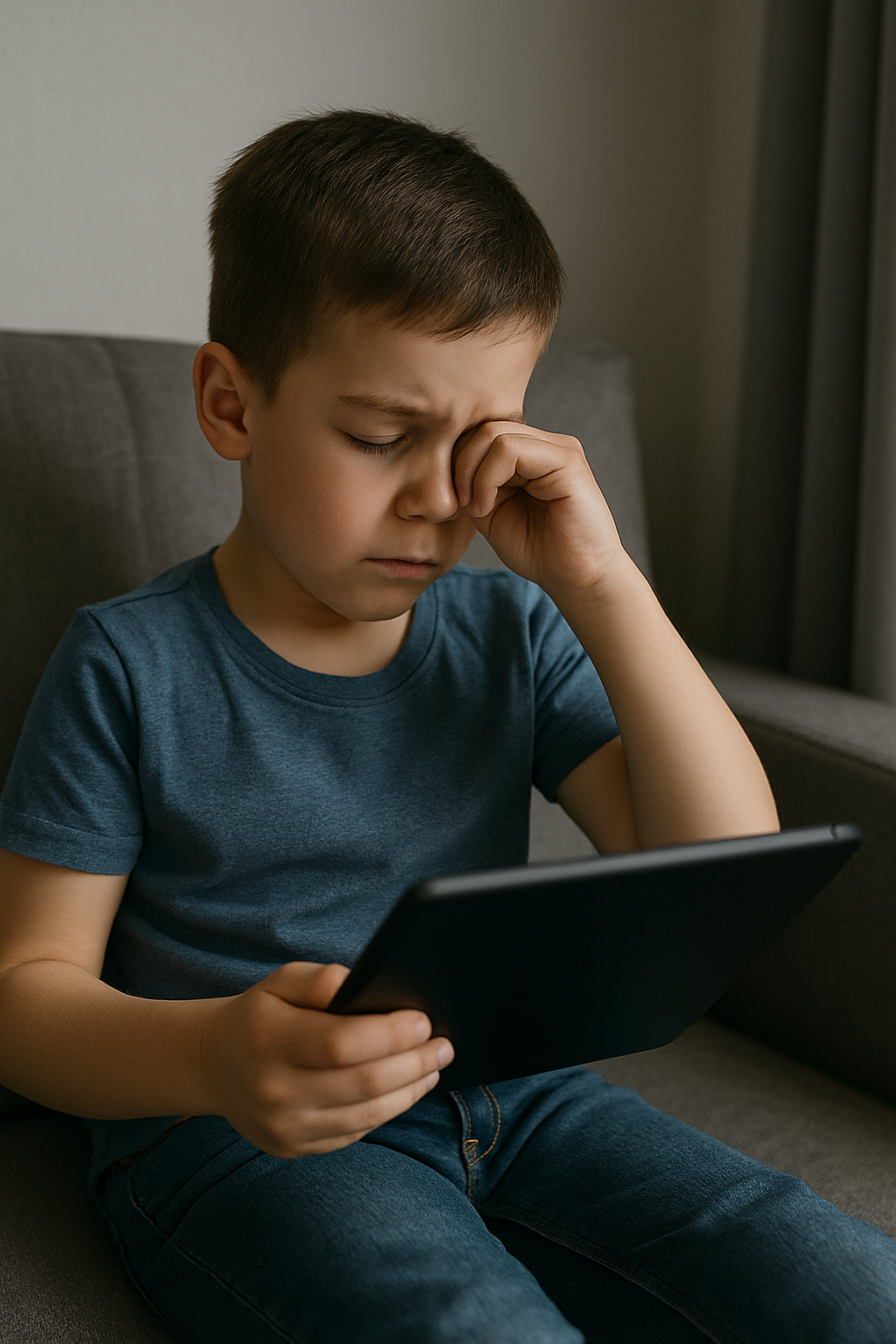
While genetics play a role, today’s digital lifestyle—especially long hours on phones, tablets, and computers—has become a major factor in the rising rates of myopia in children.
While genetics play a role, today’s digital lifestyle—especially long hours on phones, tablets, and computers—has become a major factor in the rising rates of myopia in children.
How Digital Devices Contribute to Myopia
-
Prolonged Near Work
Focusing up close for hours sends signals that encourage the eye to lengthen. -
Reduced Outdoor Time
Natural daylight helps regulate eye growth, but screen time often replaces outdoor play. -
Less Visual Breaks
Without regular pauses, the focusing muscles stay in constant tension.
Signs Your Child May Be at Risk
-
Squinting to see distant objects (school board, TV)
-
Complaints of headaches or eye strain
-
Rapid prescription changes at annual exams
-
Preference for sitting very close to screens or books
Steps to Protect Your Child’s Eyes
1. Follow the 20-20-20 Rule
Every 20 minutes, look 20 feet away for at least 20 seconds.
Every 20 minutes, look 20 feet away for at least 20 seconds.
2. Prioritize Outdoor Play
Aim for at least two hours of natural light daily. Outdoor light helps slow eye growth.
Aim for at least two hours of natural light daily. Outdoor light helps slow eye growth.
3. Create Device-Free Zones
Designate mealtimes and the hour before bedtime as screen-free.
Designate mealtimes and the hour before bedtime as screen-free.
4. Schedule Regular Eye Exams
Early detection allows for timely intervention, including myopia-control treatments such as specialty glasses, contact lenses, or low-dose atropine drops.
Early detection allows for timely intervention, including myopia-control treatments such as specialty glasses, contact lenses, or low-dose atropine drops.
Myopia Control at Pelham Parkway Vision Center
Our doctors offer a complete Myopia Control Program featuring:
-
Specialized Glasses with Myopia-Control Technology
-
Soft Multifocal Contacts
-
Orthokeratology (Ortho-K)
-
Low-Dose Atropine Therapy
Each plan is tailored to your child’s age, prescription, and lifestyle.
Take Action Today
Help protect your child’s vision before myopia progresses.
Call (718) 798-2020 or schedule an appointment online for a comprehensive myopia evaluation.
Call (718) 798-2020 or schedule an appointment online for a comprehensive myopia evaluation.